Why Leeds has owls on its coat of arms, and where to spot them
Owls are all over Leeds, from the Civic Hall towers to Leeds Bridge. Here is where they come from and how to follow the trail.
By Only Leeds Editorial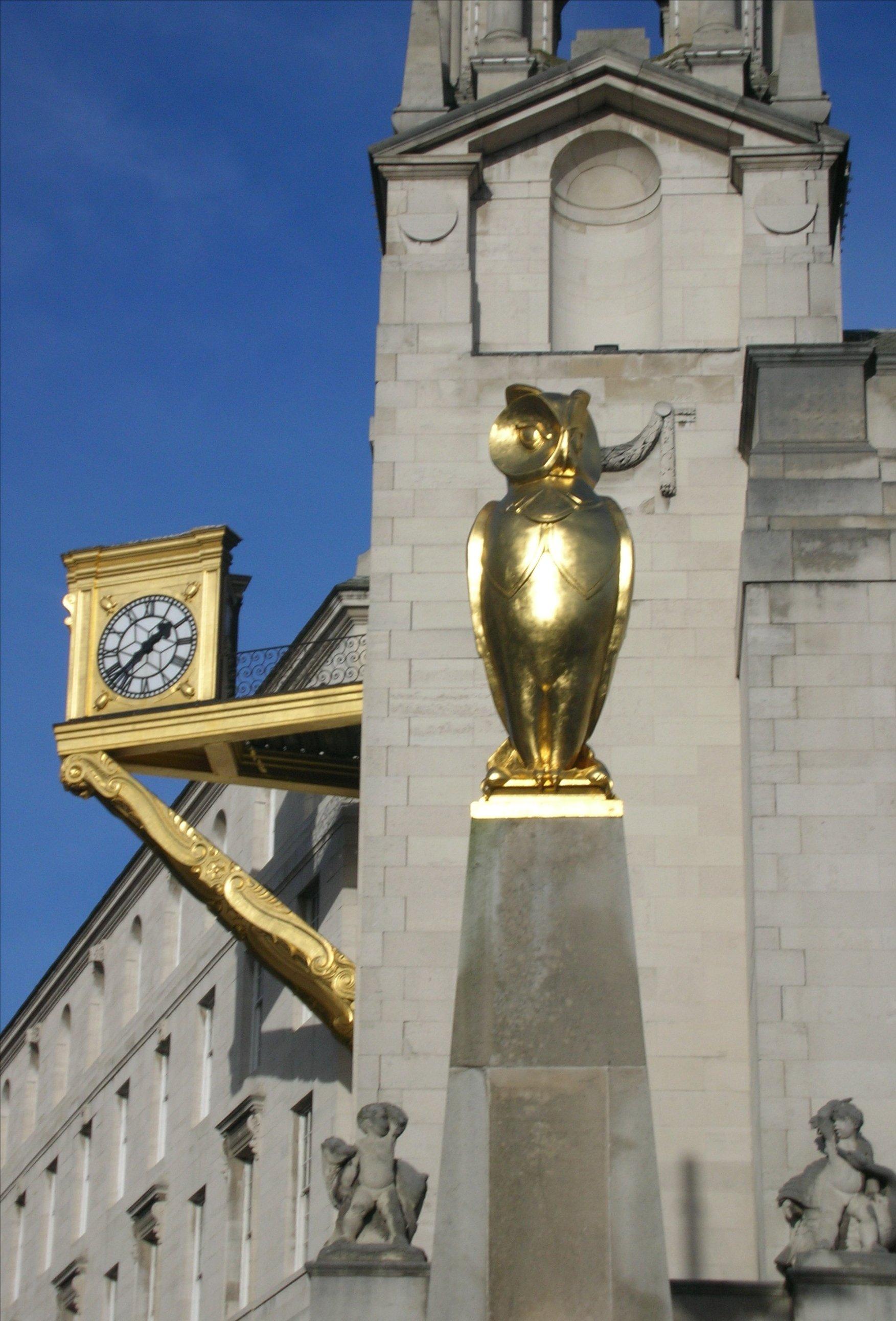
Look up in Leeds and sooner or later something with large eyes looks back. The owl is the city's unofficial mascot and a fixture of its coat of arms. Once you start noticing them, you can't stop, which is exactly the idea behind the Leeds Owl Trail.
Why an owl?
The owls come from the arms of Sir John Savile, the first Alderman of Leeds. A Royal Charter of Charles I in 1626 incorporated the borough, with Savile as its first council member. The three stars on the shield come from a different man, Sir Thomas Danby, the first Mayor of Leeds. Wikipedia dates the arms to the 1660s and says they were recorded at the Yorkshire heraldic visitation of 1666. You can read the detail on the Coat of arms of Leeds page.
Why Savile picked owls is not known. The Leeds Owl Trail site offers two guesses: he simply liked them, or they nod to Athena, who was often pictured with one. Treat both as a good pub argument rather than settled history.
The owl supporters and crest were added without official authorisation. Leeds County Borough Council applied to the College of Arms in 1920, and the grant came in 1921, dated 7 November. That is also when the owls' colouring changed from silver to “proper”, which means natural owl colour. When the 1972 Local Government Act created the much larger Metropolitan District of Leeds, the new council carried on using the old arms.
Start at the Civic Hall
The place to begin is Leeds Civic Hall, Millennium Square, Calverley Street. Construction began in 1931 and King George V opened it on 23 August 1933. Vincent Harris designed it. Two gold leaf owls top the twin towers, one on each, about 2.3 metres tall. Vanderkrogt's statue record credits them to sculptor John Hodge, made of bronze with gold leaf and weighing half a ton each. Binoculars are not required, but a bit of neck stretching is.
Look lower and there are three owls on the pediment above the main entrance, echoing the shield. There is also a plain stone owl at the building. Then check the clocks: tiny tortoises appear on them, which the Yorkshire Evening Post links to a tradition from ancient Greece. Nobody said civic architecture couldn't be a bit daft.
The Civic Hall is mainly council offices, a council chamber and a banqueting hall, so enjoy it from the square.
Millennium Square
Right outside, on columns in Millennium Square (off Calverley Street), stand four more gilded owls, nearly 3 metres tall. They were put up in 2000 when the square was created, and the city commissioned them to mark the Millennium. They are the easy win of the trail: four owls, one square, no map needed. Details of the Civic Hall and its owls are on the Leeds Inspired page.
How the Leeds Owl Trail works
Antonia Stowe and Clifford Stead, both from Leeds, launched the trail in 2009 as a thank you to the city. It is entirely voluntary and works with partners and sponsors. The printed map covers 25 locations across the city centre, and the website now lists more than 40. The map can be downloaded free from the Leeds Owl Trail site.
There are two versions to pick from:
- Civic Owl Trail: the top 10, stops 1 to 10. It begins with the Millennium Square owls, the Civic Hall owls front and rear, and the Leeds Museum owls, all in Millennium Square, then St Anne's Cathedral on Cookridge Street.
- Grand Owl Trail: stretches the route to all 25. It takes in Leeds Bridge at Bridge End, among others, and the trail site also lists spots on Park Row, King Street, Boar Lane, Kirkgate, Swinegate and Wharf Street.
Leeds Beckett's archive page says owl motifs also turn up on Leeds Bridge, the Town Hall and the Corn Exchange, so the trail is not the only reason to keep looking up.
Tips for the day
- Most owls can be seen from the street, so there is nothing to pay for the looking.
- Download the map before you set off and pick Civic or Grand depending on how far your legs fancy.
- Start in Millennium Square, where the first four stops are bunched together, then work your way south towards the river and Leeds Bridge.
Check access and opening times for anywhere you plan to go inside, such as the cathedral or the Corn Exchange, before you set off.