Hebden Bridge from Leeds by train, and the climb to Heptonstall
A direct train from Leeds, a packhorse bridge, and a very steep cobbled lane up to one of the best-looking villages in the Calder Valley.
By Only Leeds Editorial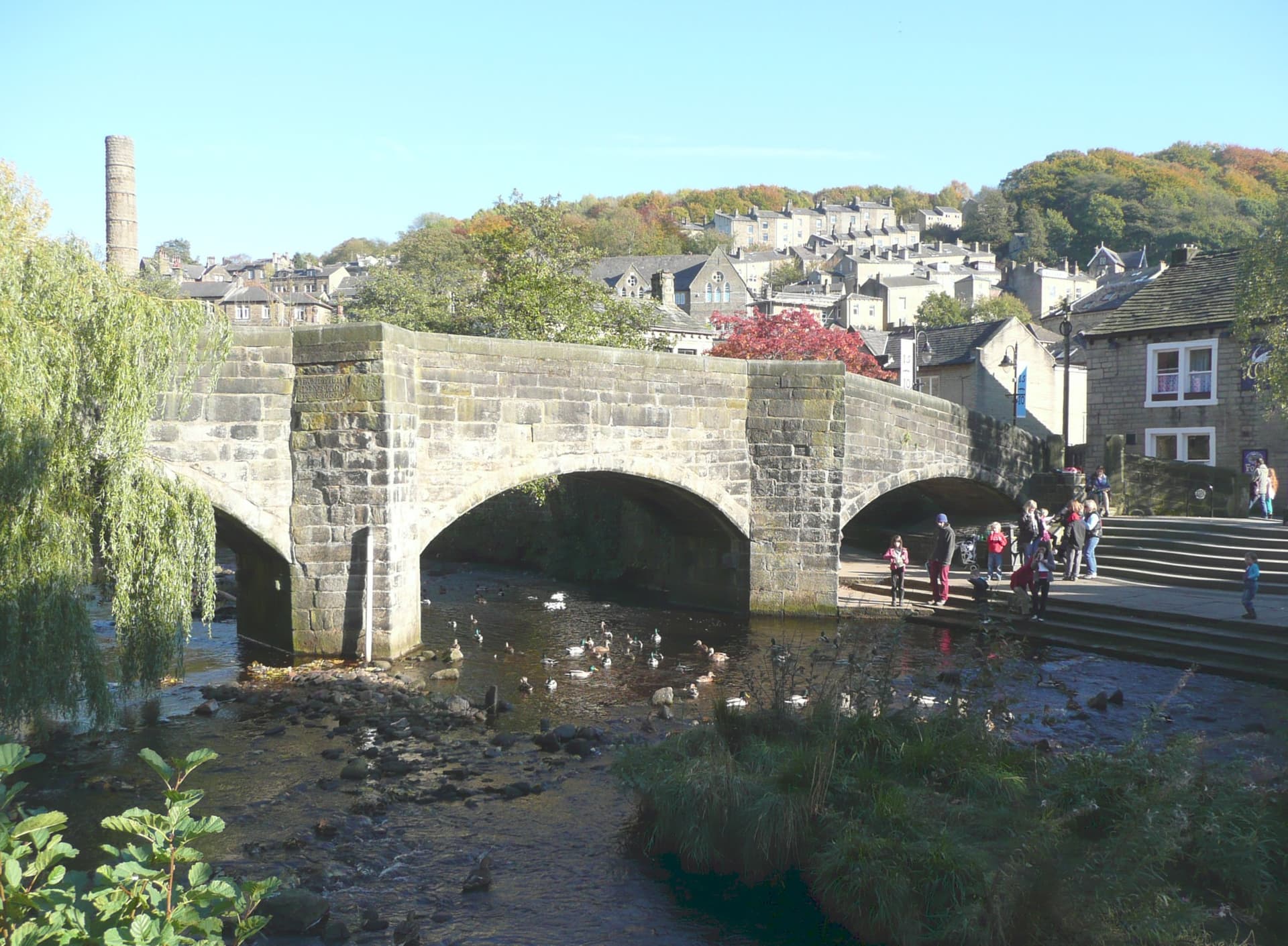
Hebden Bridge is one of the easiest days out from Leeds, because you do not need a car, a plan or a particularly early start. Northern runs direct trains, the town is flat and compact once you are off the platform, and the reward for a bit of effort is Heptonstall, a hilltop village that looks down on the whole valley.
Getting there from Leeds
Northern runs direct services between Leeds and Hebden Bridge on the Calder Valley line, which carries on through Bradford Interchange and Halifax towards Manchester Victoria. Northern's journey planner shows direct trains taking roughly 42 to 53 minutes, with single fares from £3.70. Rome2Rio puts the average at about 45 minutes with at least three trains an hour, so roughly every 20 minutes. Treat all of that as a guide and check the live times on the day.
The car does not win. Rome2Rio gives about 23 miles and 39 minutes by road, while the bus via Halifax takes around an hour and a half. The train is the sensible choice.
Two practical points. Book ahead and avoid rush hour if you want the cheapest ticket, which is the advice from Omio. And check National Rail or Northern before you set off, as Northern directs passengers to National Rail for real-time updates. If you are delayed by 15 minutes or more, you can claim through Delay Repay. You can look up times on Northern's journey planner.
The town in a few minutes
Hebden Bridge takes its name from the packhorse bridge over Hebden Water, built around 1510 and now a scheduled Ancient Monument. The town sits where the River Calder, Hebden Water and the River Colden meet, in steep-sided valleys, which is why everything feels stacked up the hillsides.
It was a mill town, known for fustian (a corduroy-type cloth) and trousers, which earned it the nicknames Fustianopolis and trouser town. Fustian workers set up a co-operative in 1870 and moved to Nutclough Mill in 1873, and it became the leading co-operative producer in the country. The industry collapsed in the 1950s and 1960s, and the town was fairly obscure until the 1980s.
If you want a rainy-day option, Hebden Bridge Picture House is on New Road. It is an independent, not-for-profit single-screen cinema run by Hebden Royd Town Council. More than half the seats were removed in 1978, so there is plenty of legroom, and it nearly became a carpet warehouse in the 1960s. Check its own site for the current programme before you plan around it. One local guide suggests the Saturday market, with its arts and crafts stalls, as a good first stop in the centre.
The walk up to Heptonstall
From the station, walk through the park, over the river and canal and into the pedestrianised centre. Then the fun starts: a steep cobbled path and steps up into Heptonstall. The Ramblers describe this route in their Hebden Bridge to Heptonstall circular.
The cobbled lane is known as The Buttress. AllTrails describes it as an ancient packhorse route and part of the Calderdale Way link route, and a Yorkshire Post walk feature said the gradient is one in three in places. Wear shoes with a proper grip, because wet cobbles on a slope are no joke. Allow roughly an hour to reach the village, with stops to catch your breath and look back down the valley.
If you want a longer loop
Distances for circular walks vary by source, so expect somewhere between about 6 and 10 miles.
- The Ramblers list an 8.3 mile route of about four hours via Heptonstall, Hardcastle Crags and Crimsworth Dene, with two steep climbs and descents.
- Komoot's most popular local route is the Hardcastle Crags and Gibson Mill loop at 6.4 miles, around 2 hours 52 minutes.
- AllTrails lists a 9.2 mile circular from the station, rated moderate, at 4.5 to 5 hours.
What is in Heptonstall
The main street is cobbled, and there is a pinfold (an old animal pound) now used as a picnic area. Heptonstall is also known for its churchyards. The original church, dedicated to St Thomas a Becket and built around 1256 to 1260, was damaged in a gale in 1847 and is now a roofless ruin. A newer church, St Thomas the Apostle, stands in the same grounds.
Sylvia Plath is buried in the churchyard. "King" David Hartley, leader of the Cragg Vale Coiners, is buried in the old graveyard near the ruins. The National Churches Trust notes that the old graveyard appeared in the BBC series The Gallows Pole and the new churchyard in Happy Valley. Its page on the church has more detail.
Heptonstall Museum is in a 16th-century building at Church Yard Bottom, on a cobbled lane with step access, so access is restricted. It is volunteer-run, and has been closed for winter works. It is due to reopen with a new exhibition, so check the Friends of the museum announcements for the latest before you go. Its listed entry price is £4 for adults, free for under-18s and students.
Planning the day
- Go in decent footwear and bring a waterproof, as the valley weather changes quickly.
- Check for engineering works before you travel. Planned closures on the Leeds line do happen, so look at National Rail first.
- Take the walk up, then decide whether to do the longer Hardcastle Crags loop or head back down to the town and the canal.
- Leave time for the return. Trains run about every 20 minutes, so you are not tied to one departure.
Hebden Bridge is a very good reason to leave Leeds for the day, and a better reason to come back to it afterwards.