Abbey House Museum and its Victorian streets, Kirkstall
A gatehouse museum on Abbey Walk with recreated 1880s streets, and a ruined abbey and a cuppa just across the road.
By Only Leeds Editorial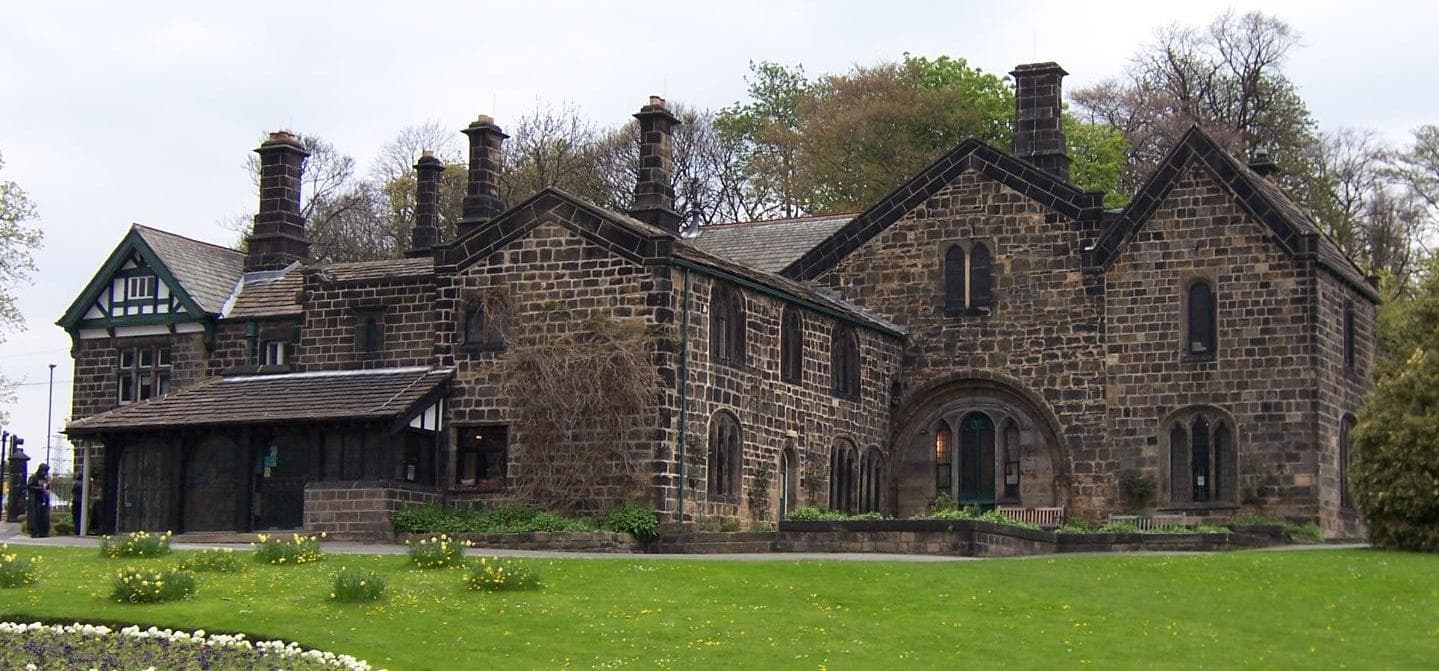
Most people come to Kirkstall for the abbey ruins. Fair enough. But the building across the road has a better trick up its sleeve: walk through a door and you are in the streets of 1880s Leeds, with shopfronts, back lanes and a pub.
Where it is and how to get in
Abbey House Museum is on Abbey Walk, just off Abbey Road, Kirkstall, LS5 3EH. It is about three miles north-west of the city centre on the A65. There is a large free car park next to the museum on Abbey Walk, shared with the abbey. A Tripadvisor reviewer says the number 34 bus runs straight from the city centre to the abbey, but check the route and timetable before you set off.
Tickets are bought on site only. According to the council's visitor page, adults are £7.35, children aged 3 to 18 are £3.60, and a family ticket (up to two adults and three children) is £16.25. LeedsCard, LeedsCard Extra and Breeze Pass discounts apply, and a National Art Pass gets you in free. Prices on the page carry no update date, so a quick check before you go is sensible.
Opening hours
- Monday: closed, except bank holidays (10am to 5pm)
- Tuesday to Friday: 10am to 5pm
- Saturday: 12 noon to 5pm
- Sunday: 10am to 5pm
Last admission is 30 minutes before closing. Saturday is the short day, so do not turn up at 10am and expect the doors open. On weekdays in term time, school groups tend to fill the place from 10am to 2pm, so arrive after 2pm for a quieter visit.
The Victorian streets
The ground floor is the main event. Creative Tourist describes the streets as authentically recreated Victorian streets of 1880s Leeds. Stephen Harding Gate is billed by Visit Leeds as the 19th-century equivalent of a modern high street, while the back streets include the home of a window-washer woman and a Sunday school. The official site also mentions a recreated pub.
The Yorkshire Post lists the trades you can peer into: a chemist with mahogany drawers and ornamental glass jars, a haberdasher, barber, grocer, ironmonger, clay pipe maker, saddler, blacksmith, wheelwright, musical instrument maker, clock and watchmaker, tobacconist and printer. Look for the chemist first. Those glass jars are worth the walk alone.
Upstairs are the Childhood and Community galleries, the original penny slot machines and a temporary exhibition. The Yorkshire Post says many of the penny arcade machines are in working order, and it also mentions toys, dolls' houses and soldiers, plus folk galleries on West Riding customs. One Tripadvisor reviewer spent a couple of hours here and mentions a kids' trail and a craft room. Allow a good hour and a half at least.
In October half term the museum has run Halloween-themed Spooky Victorian Streets, according to the Yorkshire Evening Post. Check the museum's website for anything on the day you plan to visit.
The gatehouse itself
The museum is housed in the former inner gatehouse of Kirkstall Abbey, and it is Grade II* listed. The gatehouse dates from about 1152 to 1182, and the Digital Humanities Institute notes the porter received visitors and handed out alms here. John Ripley, the last abbot, is said to have lived there until his death in 1568, closing the gateway and adding rooms and windows.
After the Dissolution it became a farmhouse and then a private home. Leeds City Council bought it in 1926 to make space for a museum, and it had a major refurbishment between 1998 and 2001.
It nearly closed, too. In December 2024 the Yorkshire Evening Post reported the council was considering closing the museum amid budget cuts. In February 2025 the paper reported the plan was shelved after a passionate response to the consultation, in which almost 10,000 people shared views. The closure would have saved £160,000 a year. Spend the entry fee and you are helping prove the point.
Across the road: Kirkstall Abbey
Kirkstall Abbey, Abbey Road, is directly opposite. Founded around 1152 on the north bank of the River Aire, it is one of the best-preserved Cistercian monasteries in the country. It is Grade I listed and a scheduled ancient monument.
It is now a Give What You Can museum, so entry is by donation. It is open Tuesday to Sunday, 10am to 4.30pm from April to September (10am to 4pm October to March), and closed Mondays except bank holidays. Last entry is 30 minutes before closing. Guided tours must be booked ahead on 0113 535 2219 or at kirkstall.abbey@leeds.gov.uk. Details are on the council's abbey page. Older third-party listings show different hours and charges, so go with the council.
The visitor centre covers the monks' lives, has a touch table of images of the abbey from the 18th century to now, plus a shop and family trails. The park has walking trails and a tennis court. Some of the grounds are cobbled or uneven, so wear proper shoes, though the visitor centre is at ground level and fully accessible.
Where to sit down
Abbey House has no café of its own. Abbey Café, in the abbey visitor centre across the road, has indoor and outdoor seating and serves cakes, coffee, sandwiches and ice cream. Order a coffee and a slice of cake, then take it outside if the weather allows and look at the ruins.
A sensible plan
- Saturday: museum from 12 noon, then the abbey, which stays open until 4.30pm in summer.
- Sunday to Friday: museum after 2pm to dodge school groups, and the abbey before it shuts.
- Park once on Abbey Walk and do both on foot.